Our train rides from Katoomba to Newcastle were uneventful, and we hopped a bus from Broadmeadow Station to the centre of town where we were staying. Our apartment wasn’t ready until 3 pm, so we had lunch at a nearby Betty’s Burgers, which was surprisingly good for a fast food chain.
We had a couple of days of wet and windy weather while we were in Newcastle, which we used for rest and work, so we didn’t get out to see as much as we might have. However, our last two days were nice, and we did get in some swims at a couple of the beaches.
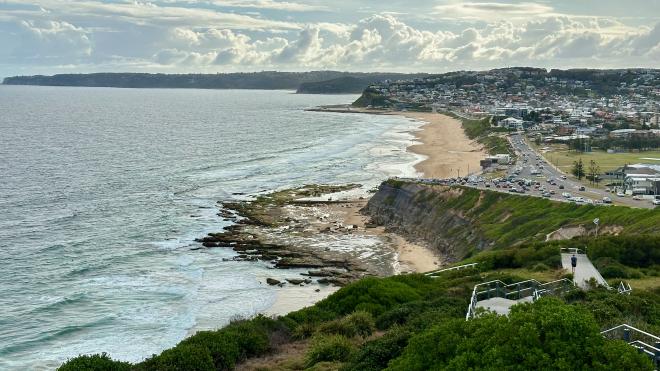
Greg went out for a run on our first evening in town, before the weather closed in. The route looked flat on the map, being along the coast, but it turns out Newcastle has some serious hills with seaside cliffs, so it was a bit more up and down than he’d bargained for. This is the view from Newcastle Memorial Walk looking toward Bar Beach, which we didn’t swim at. Newcastle has lots of beaches.
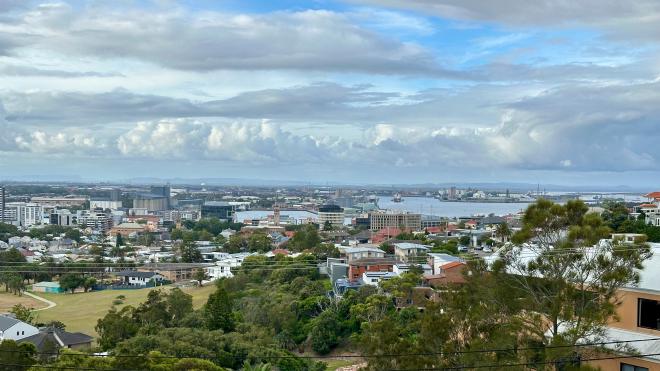
And this is the view from the same spot, looking over the Newcastle harbour and the downtown core (or CBD, Central Business District, as they say in Australia).
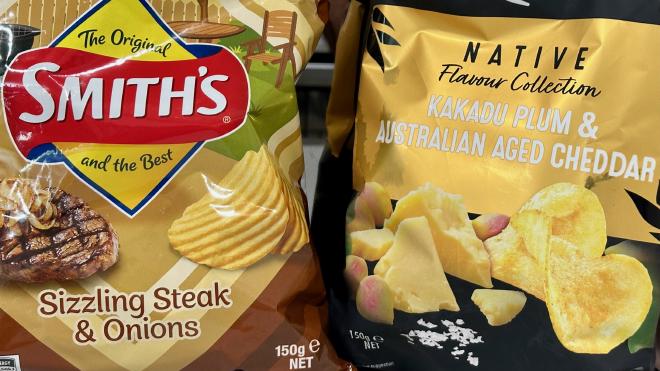
Some more new-to-us chip flavours. We weren’t impressed; the steak and onion was just weird, and the Kakadu plum and cheddar was bland.
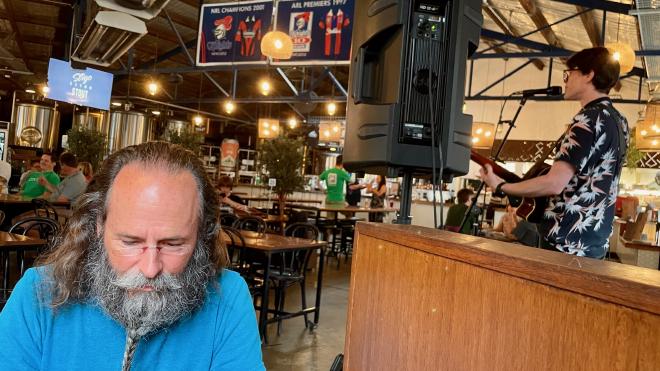
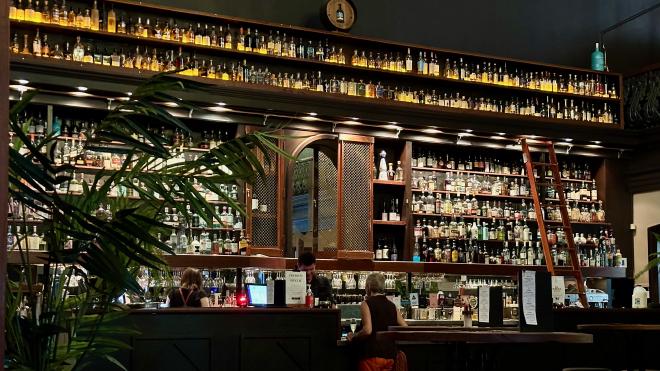
We didn’t do much tourist-ing on the 15th or the 16th. On the evening of the 16th we headed out to the Foghorn Brewery for beer and dinner. There was a large contingent of deaf people there, at least some of whom seemed to be in town for the Australian Deaf Games, which were being hosted in Newcastle from 13–20 January. The guy with the guitar in this photograph is David Macmichael, who was hosting an open mic night. We chatted with him briefly between sets; turns out he’s from Dartmouth, Nova Scotia, moved to Newcastle “temporarily” with his Australian now-wife at the beginning of COVID, and doesn’t plan on leaving.
On our last day in Newcastle we visited its coastal defence fort, Fort Scratchley. This was originally built in 1882 to defend against a perceived threat from the Russians, but didn’t see action until 1942 when Newcastle was shelled by a Japanese submarine. In some ways it was reminiscent of Kingston’s Fort Henry, but nowhere near as interesting (if we may be indulged a bit of civic pride!)
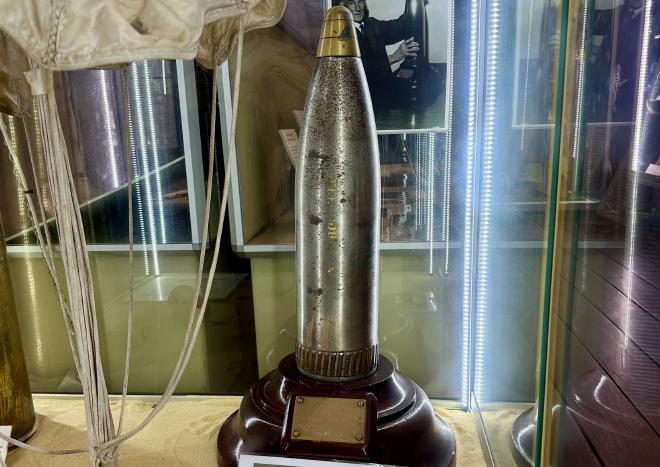
According to the displays at the Fort – which disagree slightly with the Wikipedia article linked above – of the twenty-six conventional shells fired at Newcastle, only three exploded and there were no casualties. There is speculation that the shells were 1914-era British stock that had long since expired. This is one of the unexploded shells.
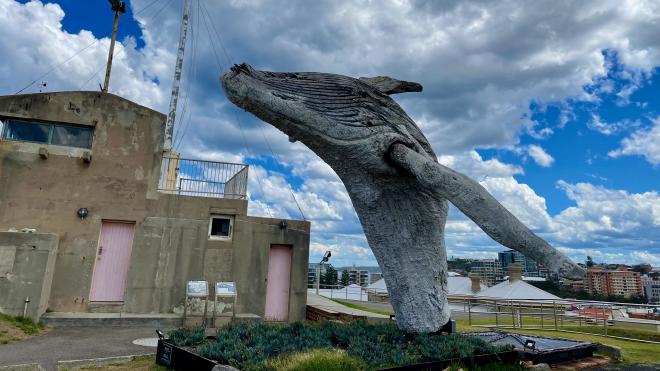
This sculpture is currently at Fort Scratchley, where it was installed last year as part of a temporary art exhibition. During the exhibition it was bought by the former Lord Mayor of Newcastle and is due to be moved to a housing estate in Tuross Head sometime soon. So we suppose we were lucky to see it.
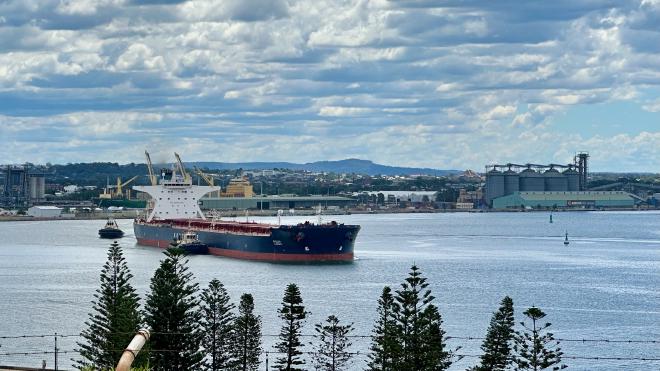
The views from Fort Scratchley are wonderful, as one would expect from a nineteenth-century defensive work. While we were up top this tanker was exiting the harbour, accompanied by three tugs.
Its slow, stately progression was very impressive and fun to watch.
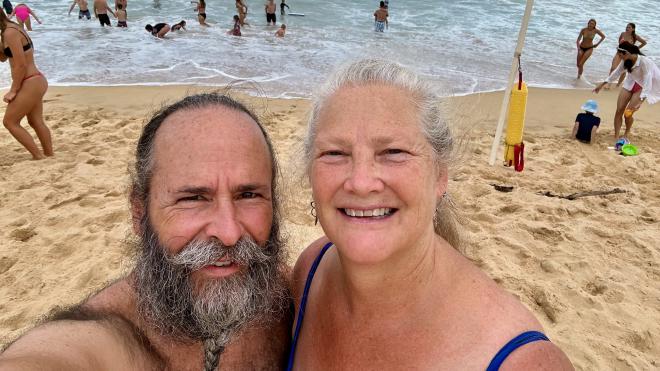
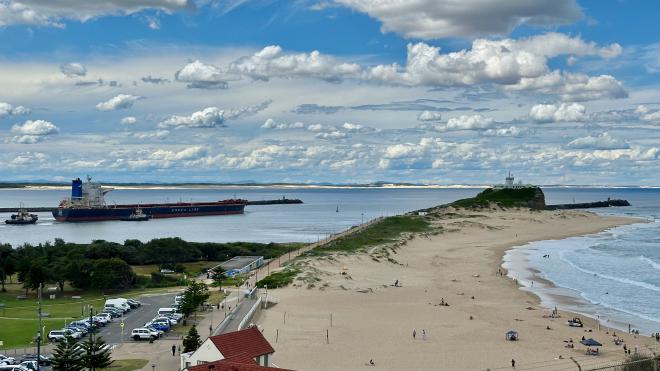
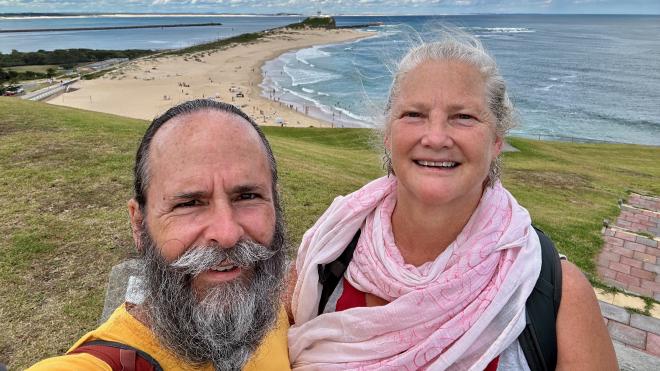
Behind us is Nobby’s Beach, our last destination for the day, where we had another short swim. Then it was back to the apartment for a dinner of leftovers and packing up for the next leg of our journey.