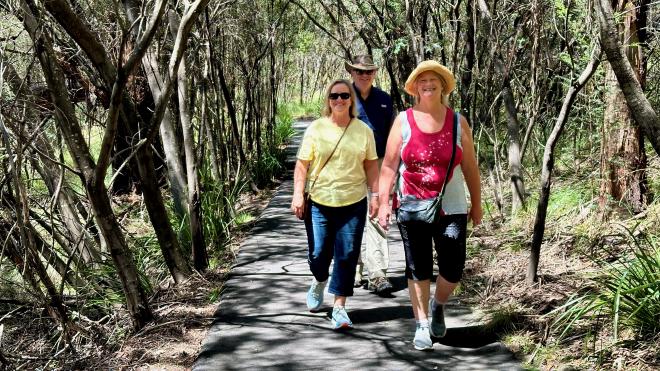
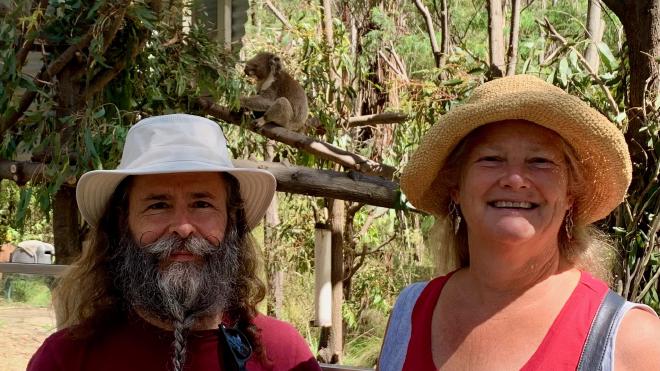
Canberra has a reputation for being “Australia’s boring city”, perhaps by virtue of the fact that it’s both fully planned and the nation’s capital. Having spent four days there, we’re delighted to tell you that the reputation is completely undeserved – Canberra is great for a visit and would be a lovely place to live.
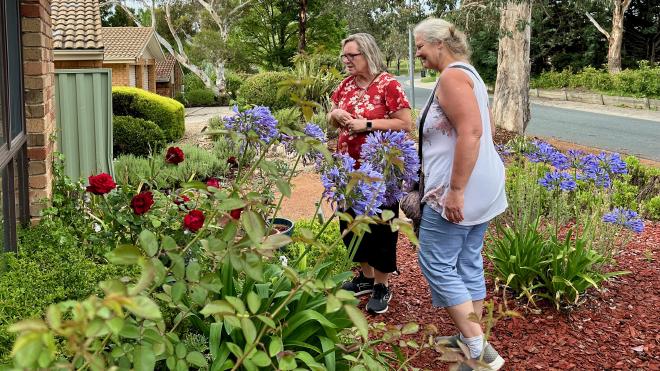
Of course, our impression may be strongly coloured by our hosts, Sandy and Alex Gibbs, who were awesome! Sandy was in Greg’s recruit flight at the Royal Military College of Canada, way back in the fall of 1983 (yay, Kilo Flight!). She met Alex, an Australian Air Force officer, when the two of them were both posted in the United States, and the rest, as they say, is history. We’d only seen Sandy a couple of times in the intervening decades and it was lovely to get reacquainted with her and to meet Alex.
We got in to Canberra’s Kingston Station a bit after 10pm and Sandy and Alex were waiting to drive us to their place in Calwell, a suburb at the southern end of the city. When we arrived, we found on their dining table a single sheet of paper with a long list of potential things to do while we were in town. We didn’t get to everything on the list, but we sure made a good try! Sandy retired from a position at the Red Cross a while back, and Alex retired from the Air Force just before Christmas (retired again, he’s had a complicated career), so both of them were free for our whole visit.
Our first excursion was to the Tidbinbilla Nature Reserve, in the hills about 30 kilometres west of Calwell. The reserve has many different walking trails, each highlighting a different natural environment.
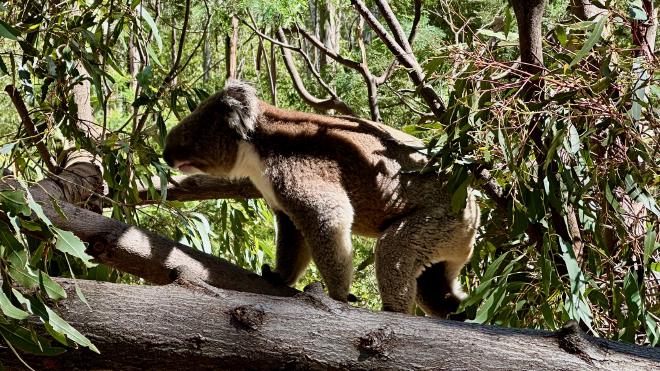
Our first destination was the Eucalypt Forest, an area surrounded by a “predator-proof” fence to provide a safe area for koalas, potoroos and wallabies. It also includes a breeding population of koalas in a separately-fenced area, which is where we saw this one. Koalas sleep 20 hours a day and are mostly nocturnal, so it was unusual to see one actually moving around.
Thanks to Sandy and Alex for this photo. Other photos by them are noted (S/AG).
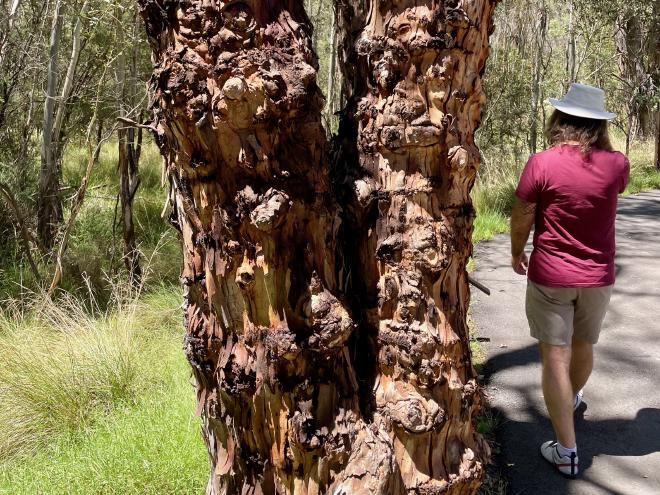
We were unable to figure out exactly what kind of tree this was, but it was certainly cool-looking.
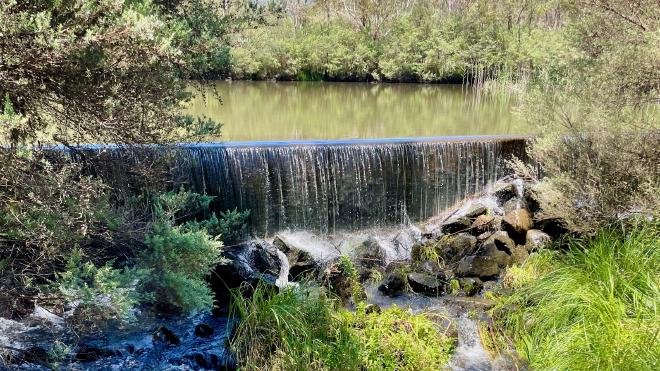
This pond, in the Sanctuary, is a breeding area for platypuses. As you can see, it was overflowing from all the recent rain. Unfortunately we didn’t spot any of the inhabitants, which is hardly surprising as they’re generally nocturnal and spend much of their time underwater.
From Tidbinbilla we made a brief stop at the Lanyon Homestead, a restored farm from the early 1800’s that was originally worked by convict labour. It has lovely grounds and is a popular spot for weddings. Sandy and Alex’s son got married here.
By this point it was time for lunch, and we headed to Capital Brewing for beer and some Peruvian (we think?) street food. It was a lovely day for sitting in the sun and the food and drink were delicious. (S/AG)
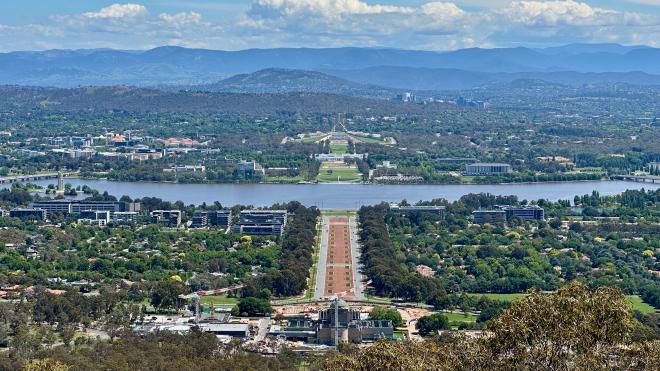
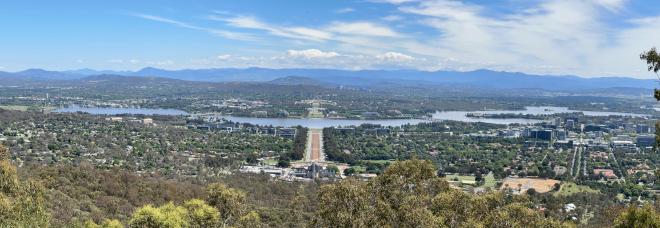
Here’s a wider view, showing more of Lake Burley Giffin (which is an artificial lake – natural lakes are rare in Australia) and more of Canberra’s generally-radial street plan.
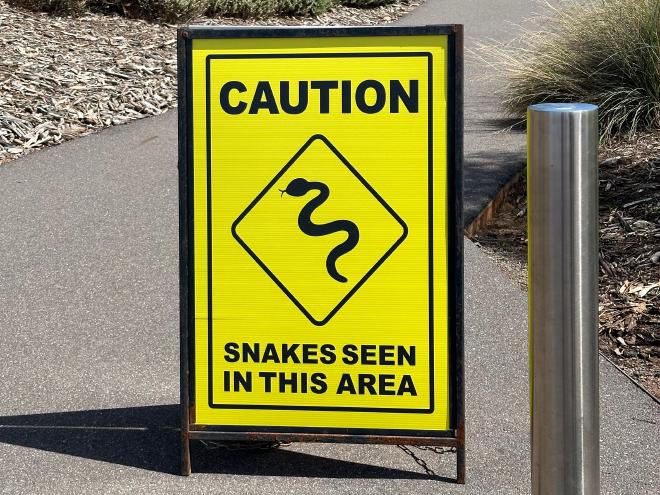
We saw signs like this quite a few times during our trip, but everyone keeps reassuring us that “Australia is actually quite safe.” Sure it is! Tell that to the players at the Brisbane International tennis tournament, from the week before our Canberra visit.
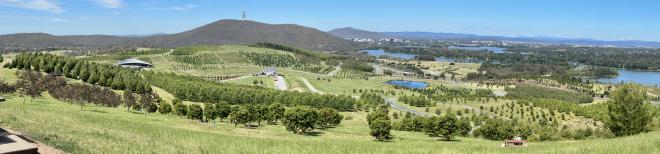
From Mount Ainslie we headed to the National Arboretum. This is the view from Dairy Farmers Hill Lookout. The Arboretum is relatively new, created on land that was badly burned in the 2003 Canberra brushfires. The theme of the Arboretum is “100 forests, 100 gardens”, as can be seen from the plantings of many different kinds of trees.
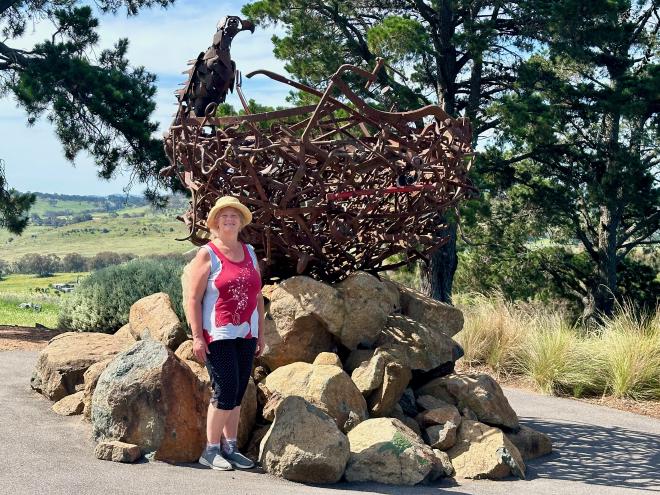
This striking found-objects sculpture on Dairy Farmers Hill is Nest III, by Richard Moffat.
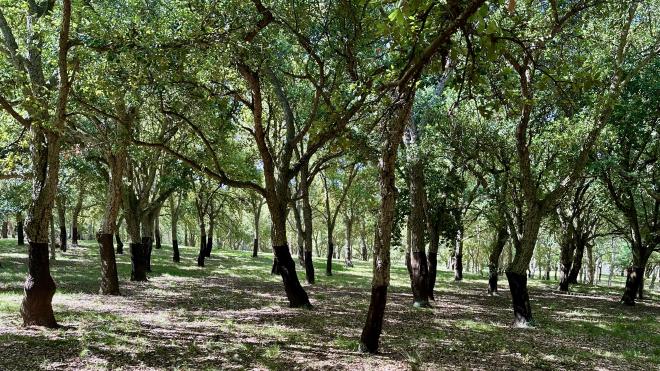
The Arboretum includes this forest of about 2600 cork oaks, planted in 1917 and 1920, which survived the brushfires.
The trees have been harvested on several occasions, most recently in 2013. The trail through the forest makes for a delightful walk.
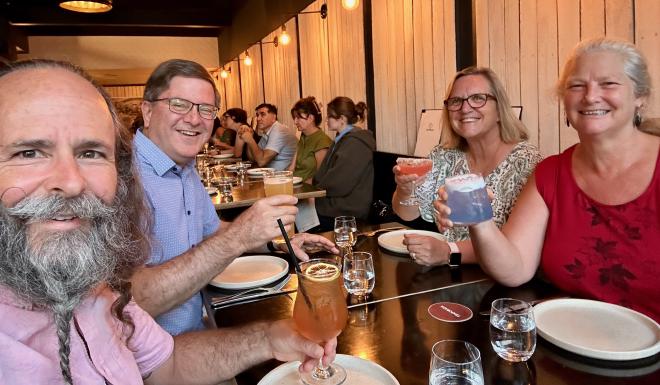
After a rest at Sandy and Alex’s we headed out for dinner at Temporada, a lovely restaurant in the downtown core. Our kids had bought us a gift certificate as a Solstice present, on the recommendation of one of Jared’s friends who lives in Canberra. And it was a great recommendation – attentive service, interesting cocktails, and delicious food. As a bonus, Sandy and Alex had never been there before so they got to try someplace new.
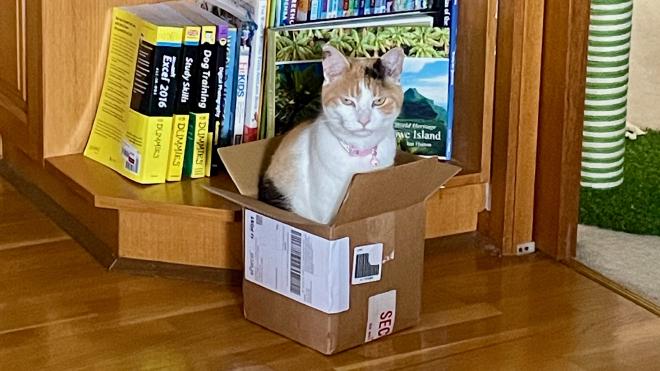
Greg’s old running watch had started dying part-way through the trip, so he decided to get another. Garmin had a really good sale on their Forerunner 255, which is now one model behind, so he bought one and had it delivered to Sandy’s place. Their cat put the shipping box to good use, and despite the somewhat forbidding expression she’s actually quite friendly.
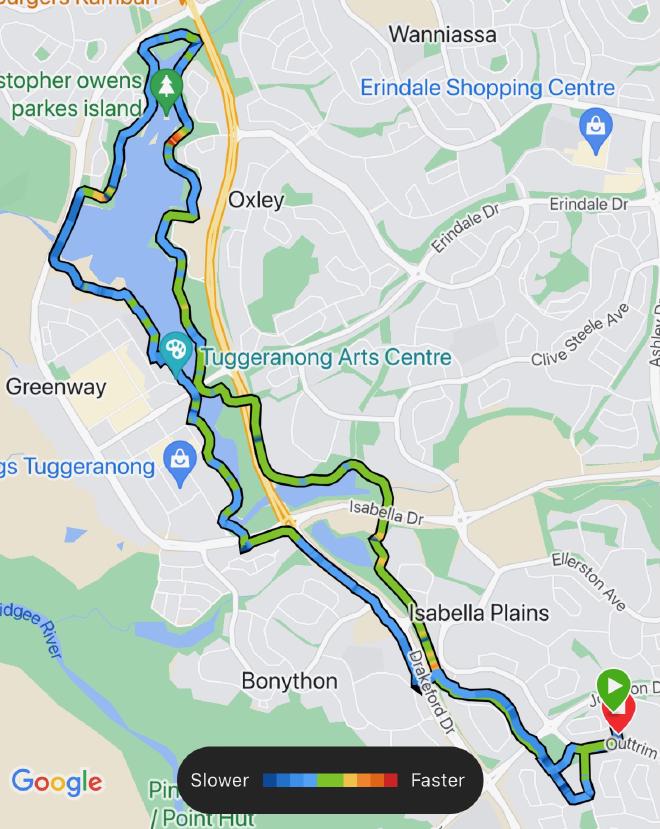
And while we’re on the subject of running, here’s the track from one of the runs Greg did in Canberra. Other than the first few hundred metres, the entire route was along bike paths that are completely protected from the roads. And bike paths are literally everywhere in Canberra: have a look at this map!
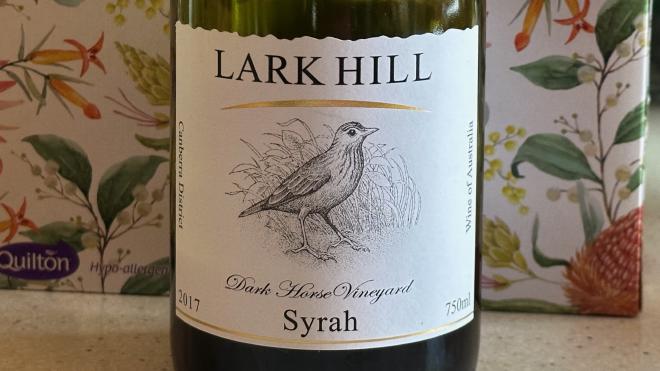
Our main excursion the next day was a trip to the Lark Hill Winery for a wine tasting and late lunch. We tried three of their reds and three whites, all of which were delightful and very different from one another. We didn’t actually take any photos at the winery (too distracted by the delicious wine and food?) but this is one of the bottles Alex purchased to bring home.
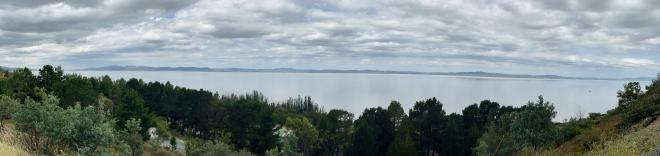
Just north of the winery is Lake George, which is an endorheic lake (closed, with no outflow). And there’s your word of the day; try to use it in an email sometime soon! When Sandy and Alex moved to Canberra in the early 2000s there was a major drought in New South Wales and the lake was completely empty. It only started filling again in 2010, and wasn’t full until 2016. Its level fluctuates in not-entirely-predictable ways and its behaviour is still something of a hydrological mystery.
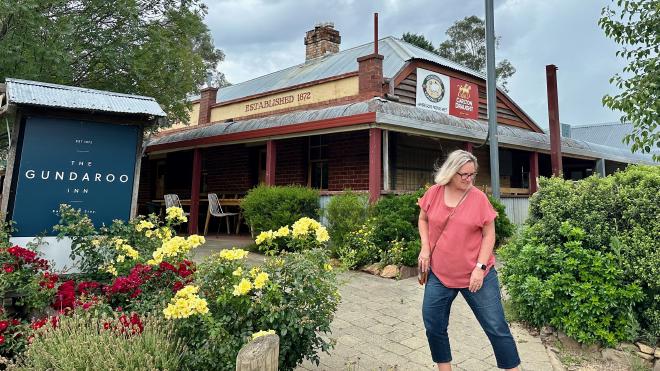
From Lake George we headed north to Gundaroo, where we stopped at the Gundaroo Inn for a drink and to soak in the ambience. Originally opened in 1872, it’s one of the oldest continuously-operating inns in the country. And no, Sandy isn’t practicing one of her dance moves; Greg just happened to click the shutter as she was changing direction.
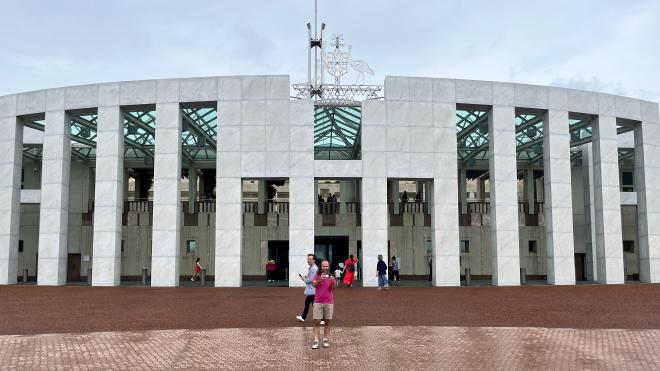
The next morning we headed out to Parliament House. This is quite a modern complex, opened in 1988 when it finally replaced the Provisional Parliament House (now the Museum of Australian Democracy at Old Parliament House) that had filled the role on an interim basis from 1927. Here’s a picture of Greg taking a picture of the rest of the group… (S/AG)
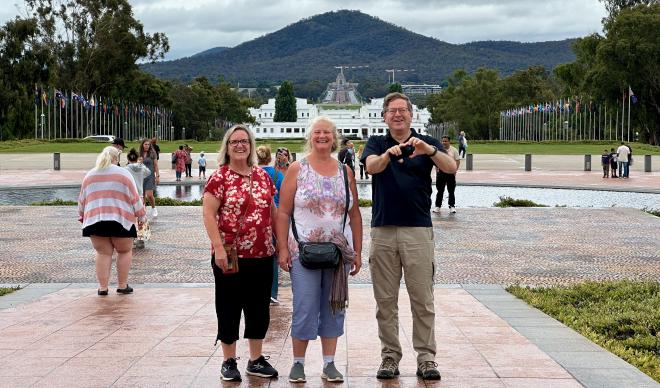
… and here’s the picture he took. In the background you can see the Old Parliament House, then Anzac Parade and the Australian War Memorial, then Mount Ainslie.
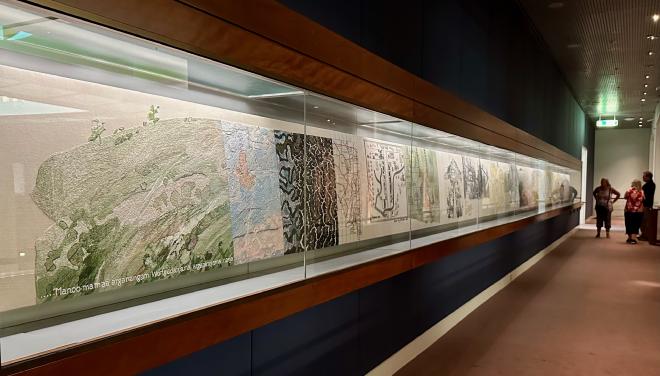
Inside Parliament there is a large display of Australian art, including this 16 metre long embroidery in the Great Hall.
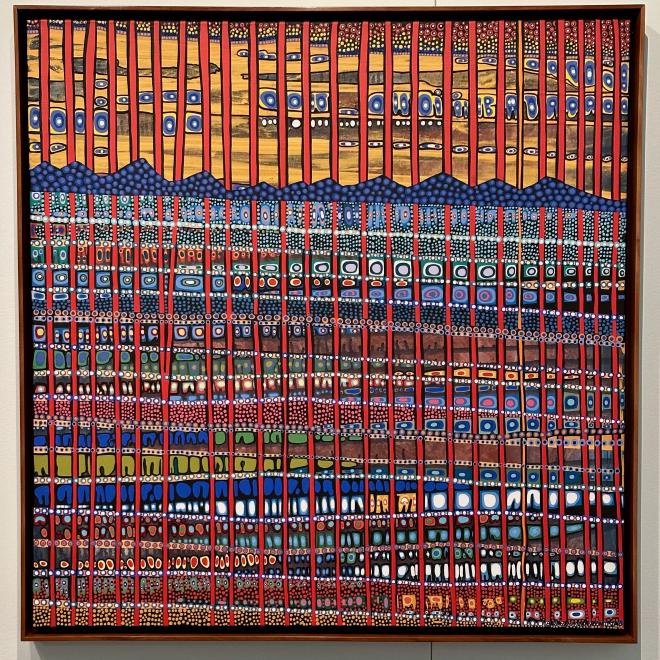
This painting is called Timeless. In the words of the artist, Dr Bronwyn Bancroft, it represents “my deep respect for the land that our ancestors walked in, loved in, died in. The enduring history of our longevity in Australia and our struggles are enigmatic of the love that I have for this timeless country.”
Australia’s Parliament operates on the UK model, similar to Canada’s. This is the House of Representatives, coloured green after the UK House, but eucalyptus green to honour Australia.
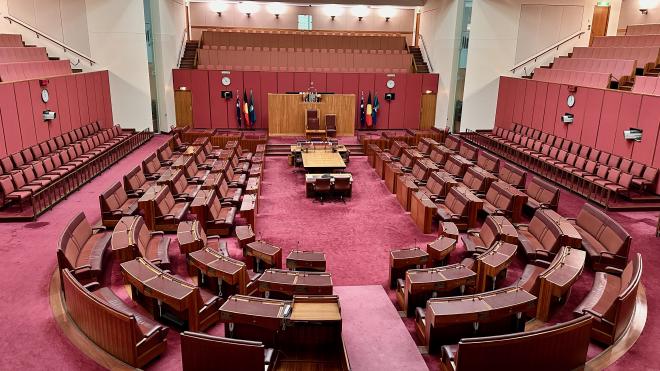
This is the Senate, also red like the UK Senate, but in an ochre red like much of the Australian landscape. Senators in Australia are elected on a state-by-state, proportional representation basis, with a six-year term of office.The Canadian Senate? Not so much.
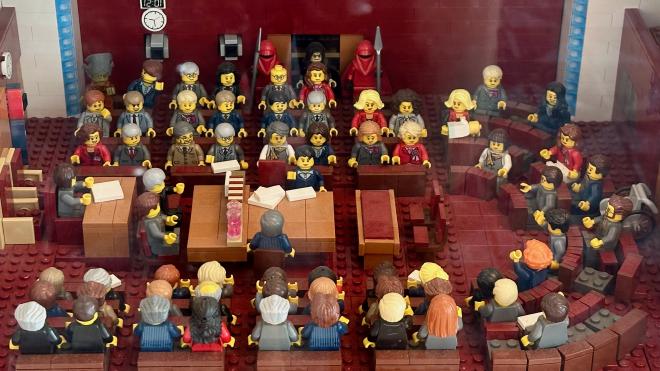
Our favourite bit is Emperor Palpatine entering the Senate with two Imperial Guards.
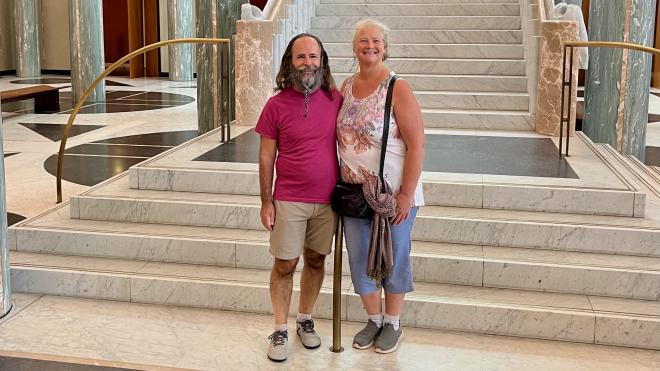
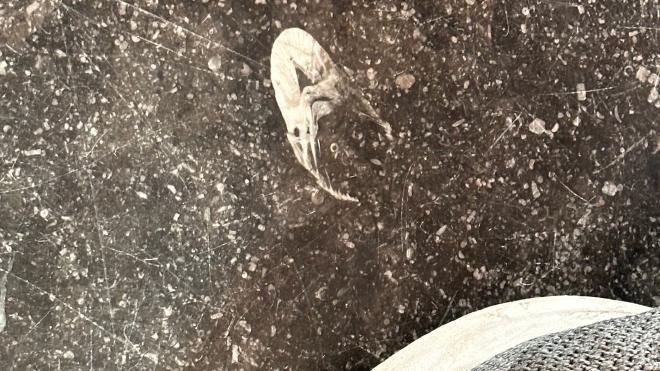
The entry is all Australian marble, with green marble columns meant to give the impression of a forest. If you look behind us, on the black marble at the bottom of the stairs, you’ll see a lighter spot. (S/AG)
That spot is the Shawn the Prawn, an unofficial parliamentary mascot that appears on souvenirs in the parliamentary gift shop. Shawn is a fossil, but not the actually fossil of a prawn – he’s really a clump of coral that happens to be in a prawn-like shape.
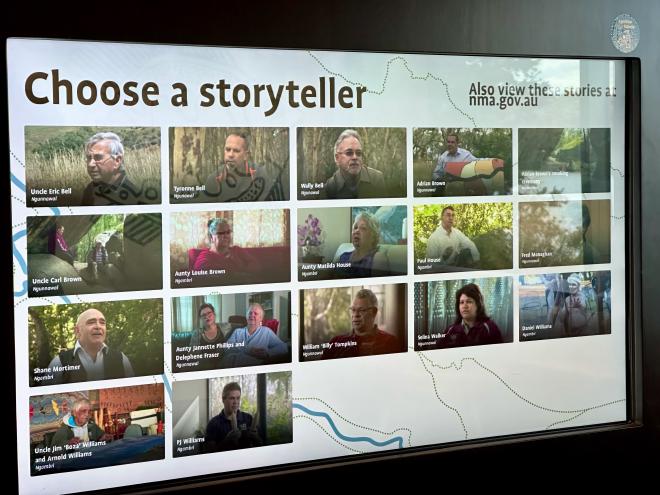
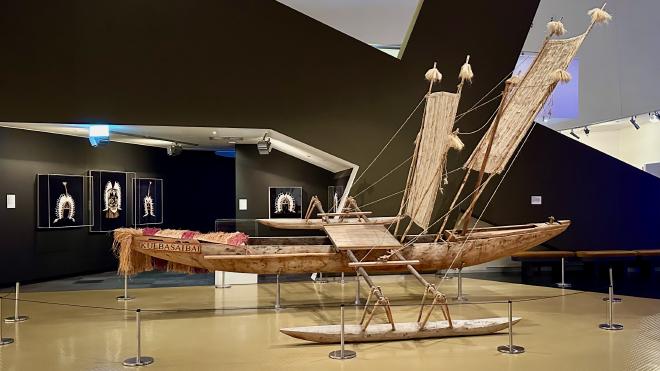
From Parliament we headed to the National Museum of Australia where we started with a very nice lunch in the cafe. We then spent a few pleasant hours wandering the permanent exhibitions (which, like most Australian museums, are free). A section of the museum, entitled Talking Blak to History is dedicated to Aboriginal reconciliation. We quite enjoyed listening to some of the video stories from Aboriginal elders.
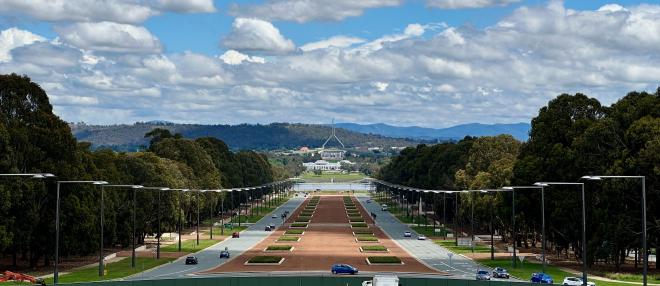
Our main excursion on our last day in Canberra was a visit to the Australian War Memorial. This is the view from the Memorial looking down Anzac Parade towards the old and new Parliament buildings. Anzac Parade is the site of the annual national remembrance celebration, and it’s lined with smaller memorials to specific military organizations and battles.
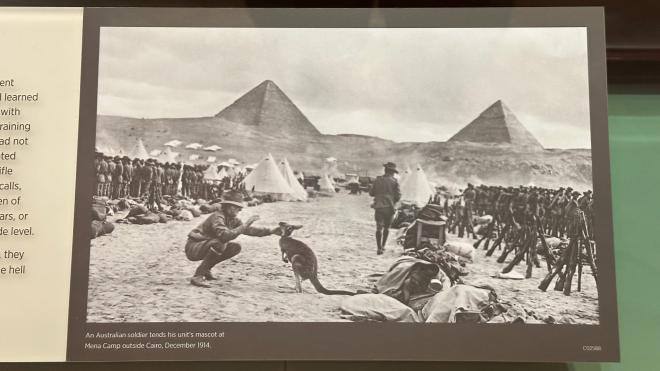
Visits to the War Memorial are by timed tickets, which theoretically give you two hours inside – ’though the staff wasn’t actively kicking anyone out. The exhibits cover Australia’s complete military history, right up to the modern day, and are extremely extensive. Long story short, we were there somewhat longer than our official time, and didn’t see much beyond the end of World War II. We will definitely have to return.
This plaque displays the death count from the 1915–1916 Galipoli Campaign, an ultimately-unsuccessful eight month-long attempt by the Entente forces, including Australia and New Zealand, to take control of the Ottoman Straits. Galipoli occupies an analogous place in the Australian psyche to what the battle of Vimy Ridge does for Canadians – a costly catalyst to the birth of an independent nation. But where Vimy was short and a victory, Galipoli was neither. Australia’s national ceremony of military remembrance, Anzac Day, takes place on April 25th, the anniversary of the amphibious landings on the Galipoli peninsula.
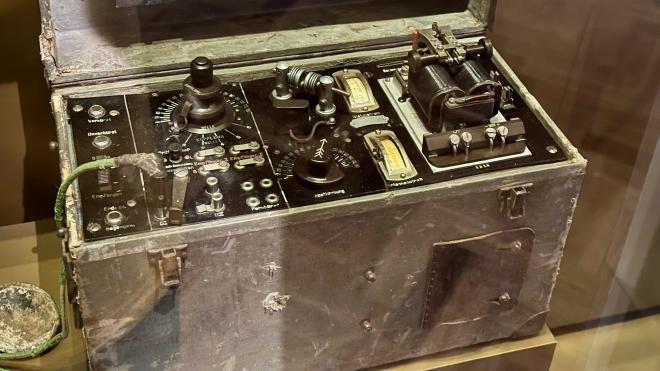
This is a German radio set, captured in Zonnebeke, Belgium by Australian troops, in 1917.
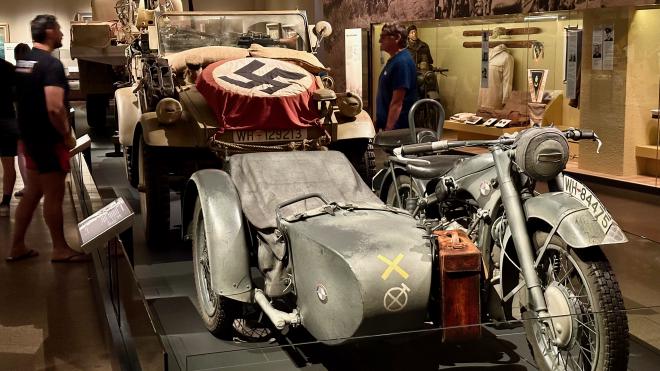
Captured Nazi vehicles from World War II.
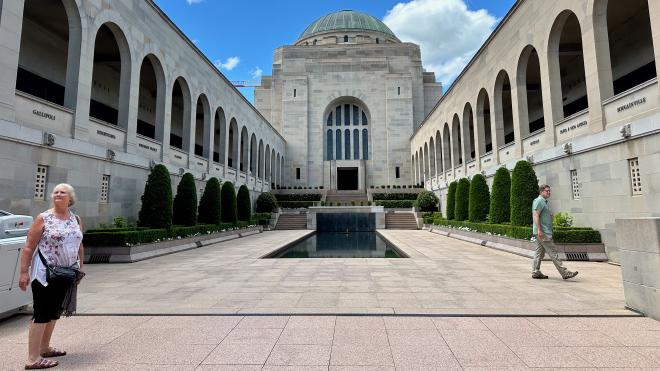
After touring the exhibits, we visited the memorial courtyard, to pay our respects to many generations of Australian war dead.
From the Memorial we went to the Canberra Southern Cross Yacht Club, which Alex and Sandy belong to, where we had a delicious late lunch of fish and chips and beer overlooking Lake Burley Griffin.
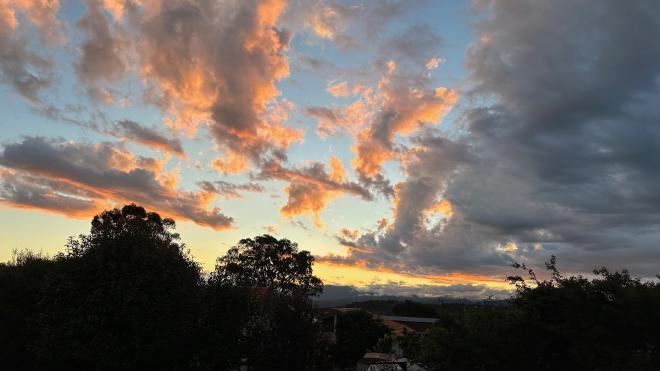
That evening was unfortunately our last in Canberra. We had a lovely dinner at Sandy and Alex’s place and were treated to a spectacular sunset.
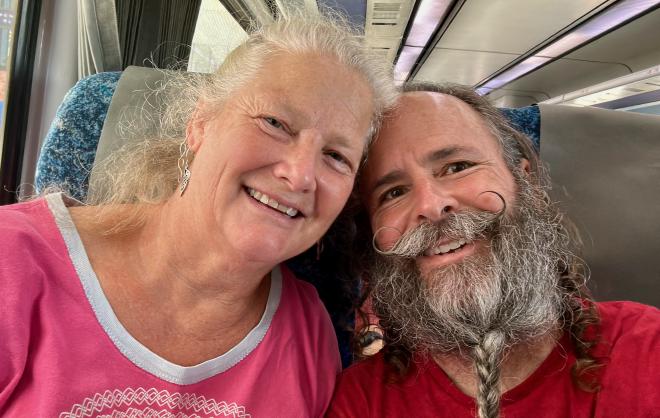
The next morning Sandy and Alex dropped us off at the train station and we were on our way to the Blue Mountains. Thanks for an absolutely wonderful visit and we can’t wait to host you at our place in Kingston!