We spent seven days in Istanbul and took a full day to get there, so brace yourself – this is a long entry! So long it’s split in two parts, this one and part 2.
Why seven days when we’d only spent three in most other cities? Partly it was because we knew Istanbul would be an amazing city with a lot to see, spanning Europe and Asia, former capital of the Byzantine and Ottoman Empires, definitely one of the great cities of the world. And partly it was happenstance. We’d actually planned to stay for five days, but got an offer from a friend that was too good to refuse and caused us to adjust our plans. But more about that later.
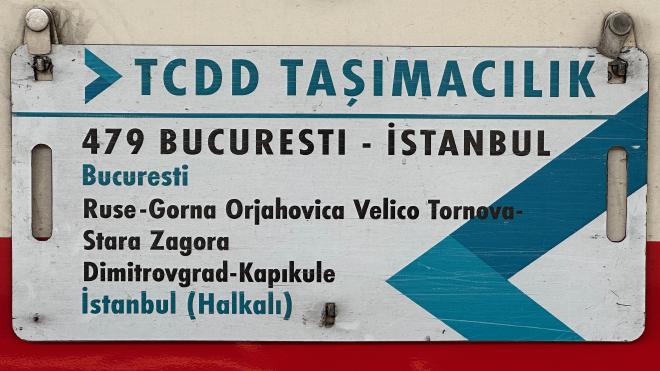
The only reasonable land route from Bucharest to Istanbul is an overnight train that leaves at 10:50 one morning and arrives (theoretically) at 6:34 the next. Fortunately, (a) it’s run by Turkish Railways, not Romanian, whew! (b) it’s sleeper-car-only, and (c) it’s a straight shot with no changes. Well, actually the train changes twice, but the sleeper cars get shuffled along from train to train, so the passengers don’t need to move.
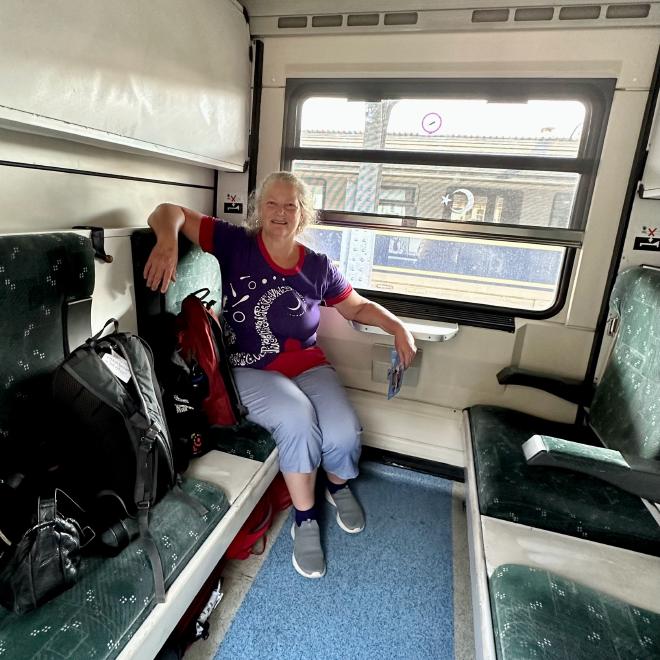
If you leave from Sofia, you can get two-person luxury sleepers, but from Bucharest it’s four-person basic compartments only. Karen is sitting on “our” side of the car. The backrest behind her folds down to make one bed, and the second bed is on the wall above her.
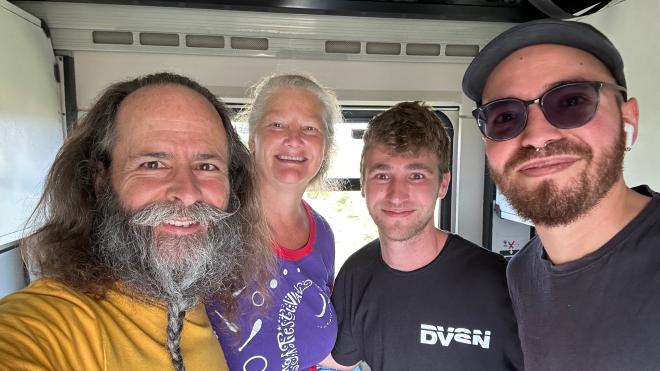
Of course, a four-person cabin means cabin-mates, which made us a little nervous. But we needn’t have worried: this is Javier and Dani, two late-twenties guys from Zaragoza, Spain, in the middle of a three-week trip through Bosnia, Serbia, Romania and Istanbul. They both spoke excellent English, which was handy given our approximately-nonexistent Spanish.
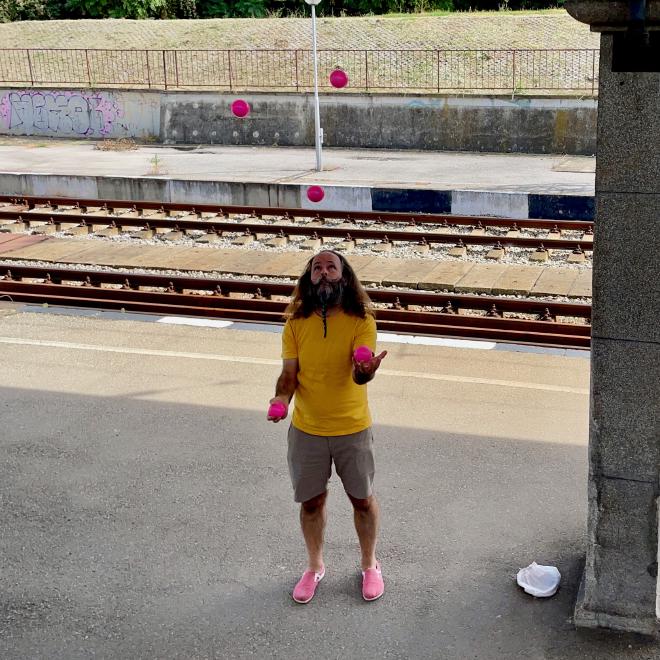
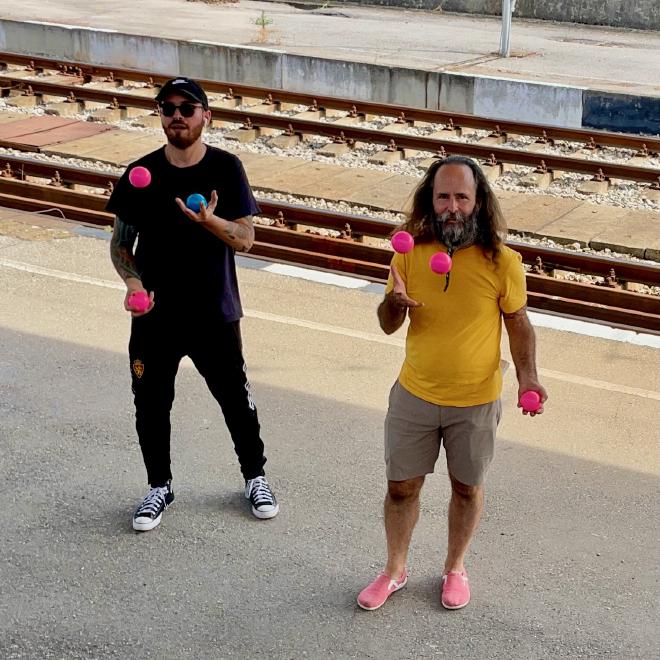
One of our twenty-minute stops for a train change turned into an hour and a half when our connecting train was late. Greg decided to do a little juggling on the platform to pass the time, and ended up teaching a few other passengers to juggle.
It turned out Dani already knew how to juggle (we told you he was a good roommate!) so he and Greg jammed some three-ball stuff and Greg taught him a couple of tricks. This is why Greg always travels with six balls, even though he can only really juggle five.
Hey, look, it’s the next day and we’re still on the train!
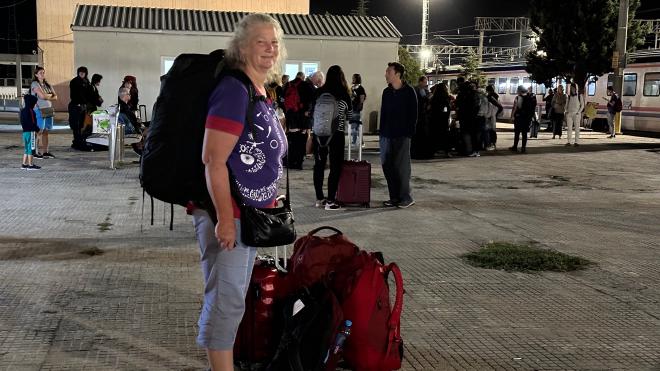
We had to get our passports stamped four times: exiting Romania, entering Bulgaria, exiting Bulgaria, and entering Türkiye. The first three were easy: the border officials came on board, collected our passports, vetted and stamped them, and returned them to the conductor. Getting into Türkiye was a bit more painful: we had to exit the train with all our belongings, have our passports stamped, and then have all our bags x-rayed in the metal shed behind Karen. Meanwhile the border guards went through the entire train searching for contraband. Eventually, after about an hour and a half, we were allowed to re-board and continue on our way. Did I mention we arrived at the border about 1:30 in the morning? Yeah. Fortunately we knew all about this in advance, from reading the excellent write-up by The Man in Seat 61, whose web site is an invaluable resource for anyone travelling by train anywhere in the world.
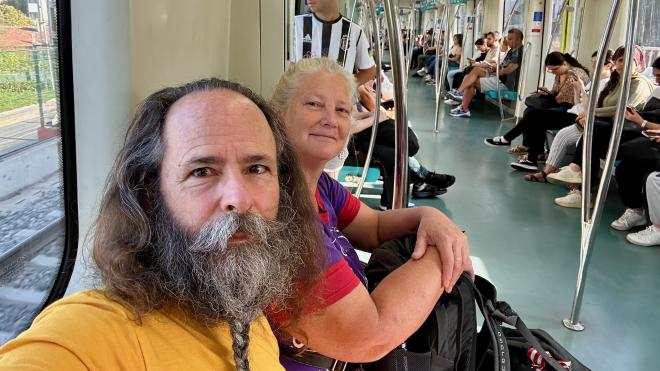
We arrived in Istanbul about two hours late, which was actually awesome because it meant two hours more sleep than scheduled. (The Man in Seat 61 had warned us we’d be late, so we weren’t surprised.) Trains coming into Istanbul from the west terminate at Halkali station, which is at the extreme western edge of the city, more than 20 kilometres from where we needed to be. Fortunately there’s an incredibly-cheap commuter train, the Marmaray, that runs from Halkali more than 76 kilometres to the city’s eastern edge. So, we bought our Istanbulkarts (which is how you pay for all public transport in Istanbul) from a vending machine, loaded them with a few Turkish Lira, and headed off.
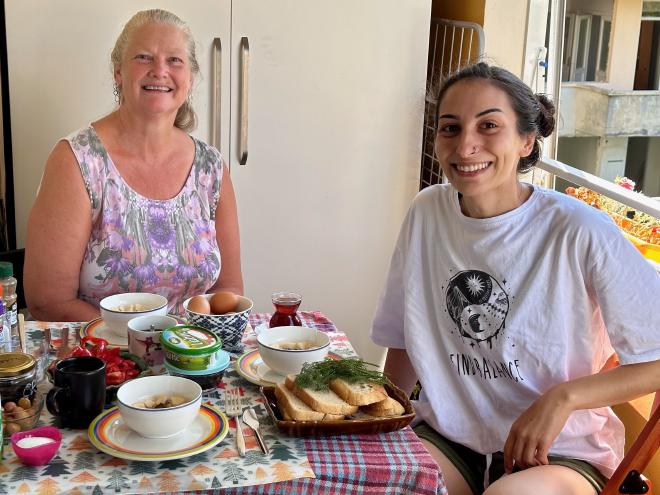
Our host, Funda, met us at the station and we had a leisurely fifteen-minute stroll to her apartment. Funda is a juggler that Greg had been introduced to at the European Juggling Convention by our mutual friend Matty from Vienna, who had lived in Türkiye for a couple of years. On the basis of a three-minute conversation (literally), Funda invited us to stay in her spare bedroom during our time in Istanbul. When we arrived she insisted on making us a typical Turkish breakfast, which we ate on her balcony. As you can probably guess, she’s a lovely, warm, kind person and we had a terrific time staying with her.
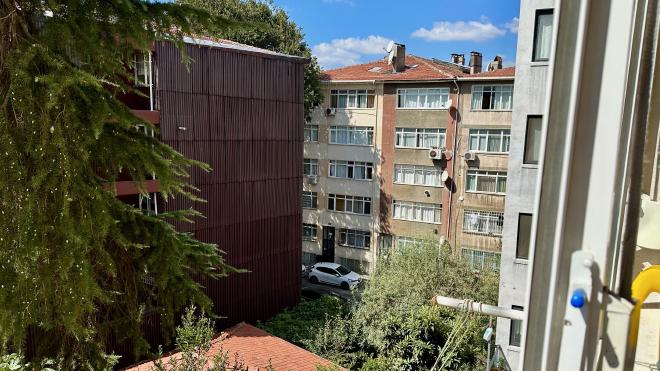
Funda has a degree in Mechanical Engineering but left that field to pursue a career in 3D computer animation. She works for an Istanbul studio that mainly contracts work on Romanian and Indian children’s shows. This is a view from her balcony. Note the varying construction styles of the surrounding buildings, including the brown one that’s covered in sheet metal on the near side.
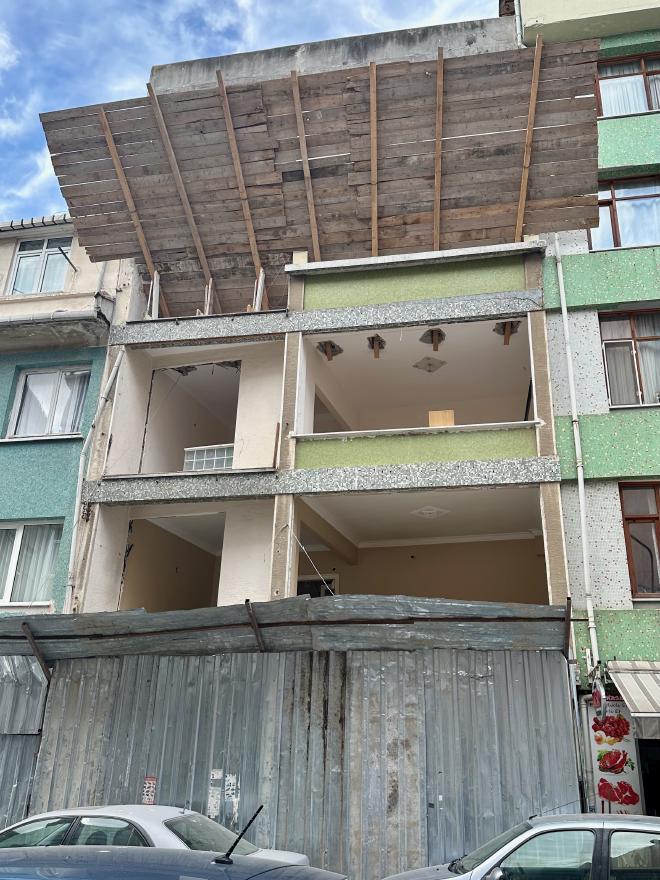
This building is just around the corner from Funda’s. In fact, you can see it at the right-hand edge of the breakfast picture, two up. It’s currently being demolished, as it was found not to be up to earthquake code. This is a big deal in Türkiye right now, after the tremendous losses of life in the quakes earlier this year.
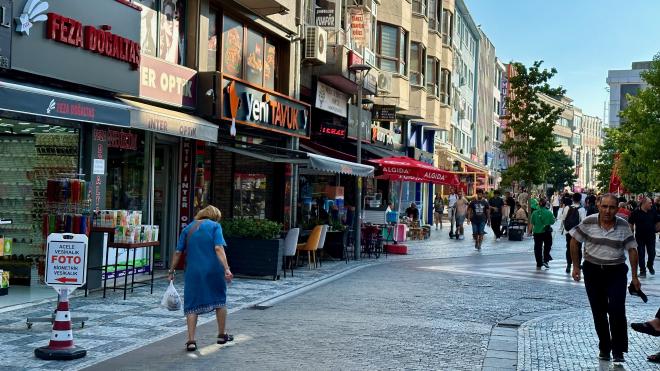
We decided to spend the rest of the day going for a walk and soaking up the local vibe. Funda lives in Kadıköy, which is on the Asian bank of the Bosporus against the Sea of Marmara. It’s considered one of the hip, happening areas of Istanbul. The old part of Kadıköy, which is just a few minutes south of Funda’s apartment, is a maze of mostly-pedestrian streets on a medieval street plan. Many of the streets are full of restaurants and shops.
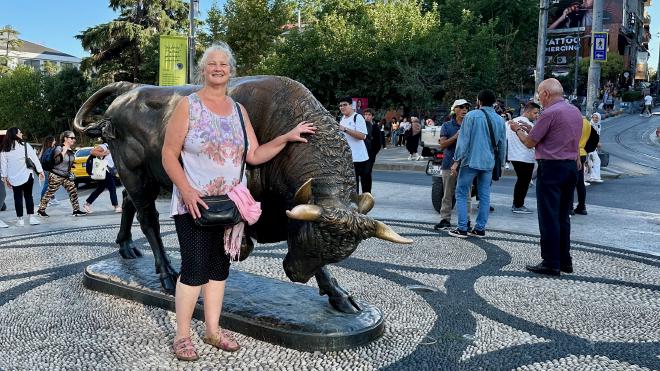
This fighting bull sculpture was made in 1864 for Sultan Abdulaziz’s gardens in the Beylerbeyi Palace. Over the years it’s been moved to at least seven different homes, but for the last 33 years it’s been at the Altıyol Junction in Kadıköy.
Istanbul is full of cats. Funda has three at her place, two of her own and one she’s minding for a friend who’s splitting her time between Istanbul and France. But there are street cats literally everywhere – as one person said, in Istanbul every cafe is a cat cafe. They’re treated as communal pets, and you’ll find water dishes and food bowls full of kibble all over the city. Some people even capture kittens to have them sterilized and vaccinated before releasing them back onto the streets.
We walked through the town centre to Kadıköy’s south shore, then followed the shore west and north before returning to Funda’s.
For our first big outing we decided to visit Beylerbeyi Sarayı (Palace), an Ottoman-era palace on the Asian side of the Bosporus, well north of Kadıköy.
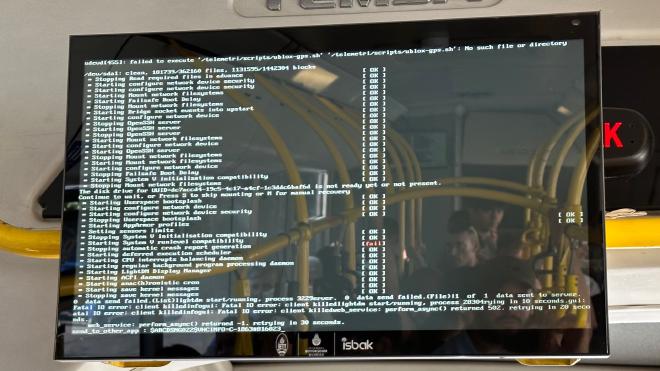
We headed to the Palace using Istanbul’s excellent bus system. At least, it’s excellent once you figure out what a bus stop looks like; the signs are quite small and often a bit hidden. Fortunately, a kind woman who spoke a bit of English pointed us in the right direction at our first stop. Greg was delighted to find that the information systems in the buses run on Linux. Or don’t run on Linux, as in this bus.
Beylerbei Palace is on the eastern bank of the Bosporus and has a lovely waterfront walk that takes you from the ticket office to the main Palace buildings.
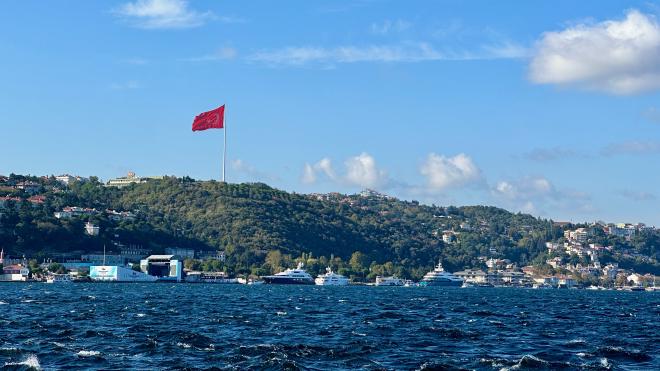
There are enormous Turkish flags all over Istanbul. This was a bit weird for Greg, as the last time he’d seen so many Turkish flags was when he was peacekeeping in Cyprus in 1991. And there the flags always came in sets of three: Turkish, United Nations, and Greek.
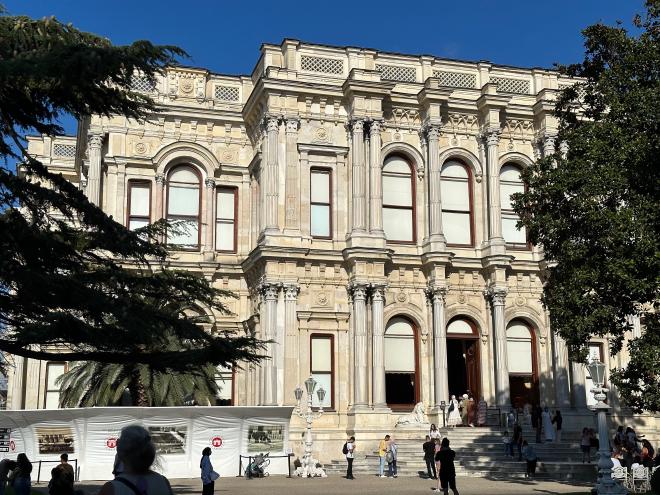
This is the Beylerbei Palace main entrance. It was extremely ornate and lovely inside, but no pictures were permitted and the staff were enforcing that quite strictly.
One of the outbuildings on the Palace grounds, showing typical Ottoman architecture.
We walked back to Funda’s along the shoreline, pausing for an excellent dinner at the Ismet Baba seafood restaurant about a kilometre south of the Palace.
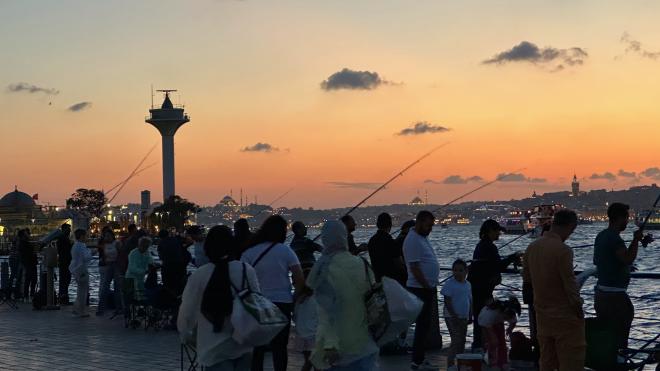
Much of the shoreline is fronted by a wide pedestrian walkway that was full of fisher folk and families out enjoying the beautiful sunset. (Later on our route we walked past the industrial port, which was much less attractive; no pictures of that.)
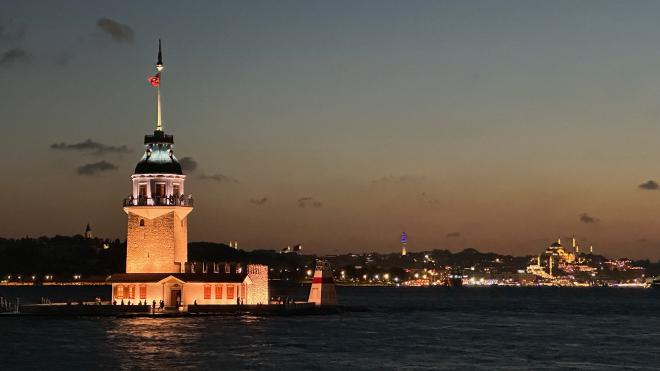
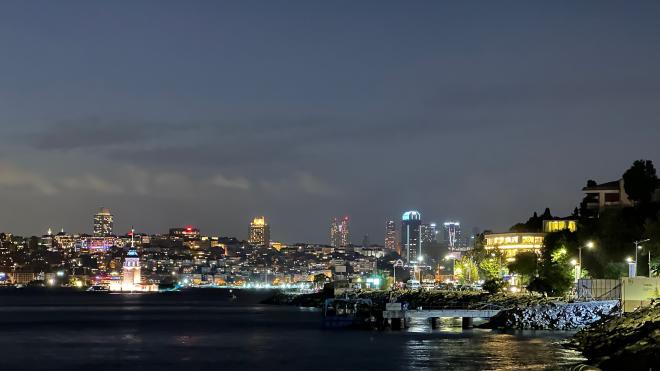
This is the Kiz Kulesi, or Maiden’s Tower, built on a small island off the eastern shore.
Another view of the Maiden’s Tower, from much further south.
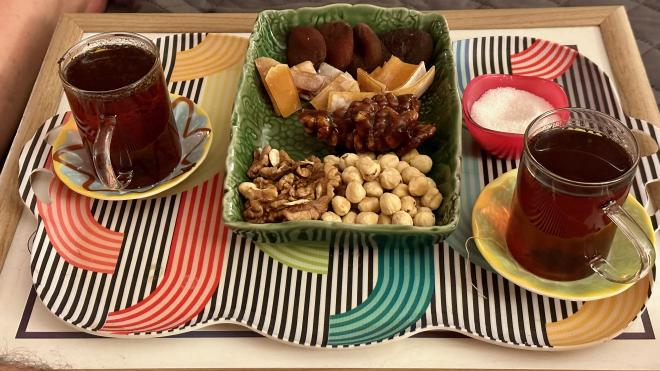
Eventually, after a few navigational errors saved by Google Maps, we made it back to Funda’s. While we were recovering on her couch she brought us this lovely snack. The lumpy bit in the middle is nuts coated in a dry grape jelly, which is a typical Turkish dish. Funda says you can get “terrible” versions anywhere, but this was from her grandmother’s village, where they do it right.
After our long walk on Saturday, we decided to take Sunday as a rest and maintenance day.
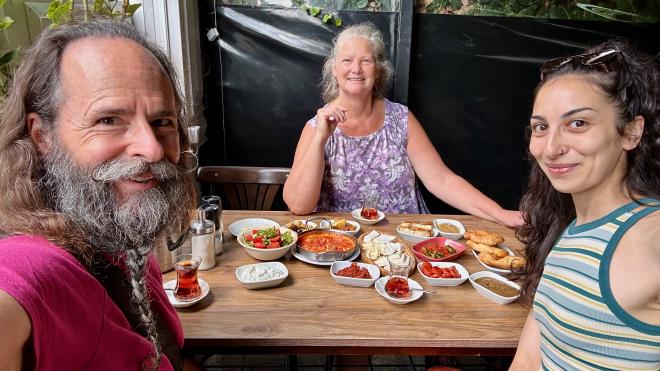
Funda wanted to show us a full Turkish breakfast, so we took her out to a restaurant she recommended in Kadıköy. As you can see, the meal consists of breads, spreads, cheese, olives, and vegetables, centred around a hot dish of menemen. This is somewhere between scrambled eggs and a frittata, with fried onions, peppers, and tomatoes. A traditional Turkish breakfast is called “kahvaltı” which means “before coffee”, the idea being that you drink (much) tea with your breakfast and have a strong coffee afterwards.
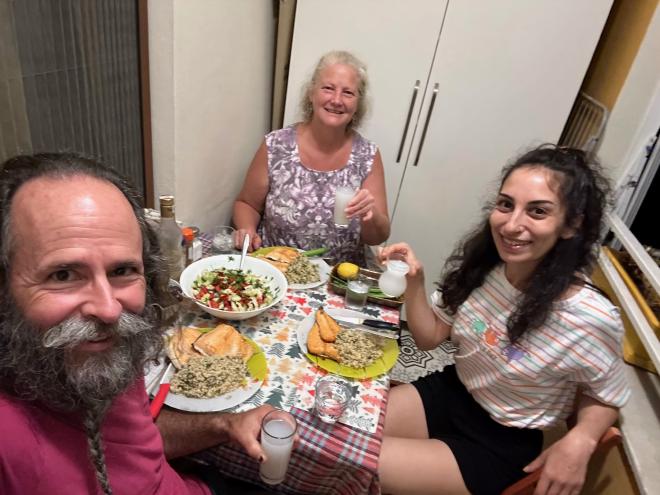
Funda insisted on cooking us dinner that evening, and prepared a lovely dish of baked salmon, seasoned rice, and salad, which we had with rakı, the Turkish version of the ubiquitous Mediterranean licorice drink.
On Monday we were up for another adventure and decided to visit the largest of Istanbul’s palaces, the Topkapı Palace on the European side. We had also planned to visit the main mosques near Topkapı, but ended up spending so much time at the Palace (which we loved) that we had to come back for those next day.
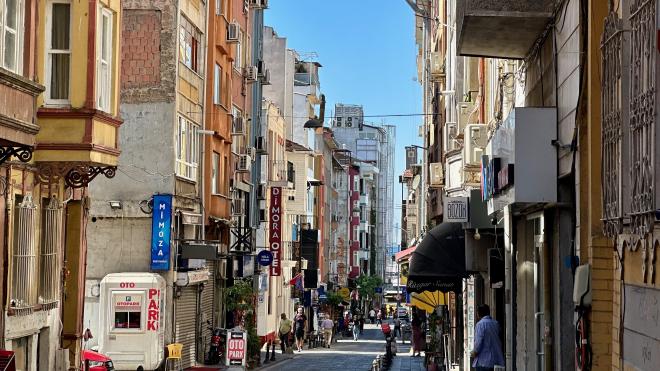
There are three ways to cross the Bosporus on public transport: the Maramaray train, which we took the day we arrived and which goes through a tunnel; the buses, which go over a bridge; or the ferries. Since there was a ferry terminal quite close to Funda’s that took us near to Topkapı, and since ferries are just more fun, we decided that was the way to go. There are 28 ferry lines crossing the Bosporus, all of which are part of the Istanbul public transport system with fares paid using the Istanbulkart. This is a Kadıköy street leading down to the ferry terminal; you can just see a bit of blue water at the end.
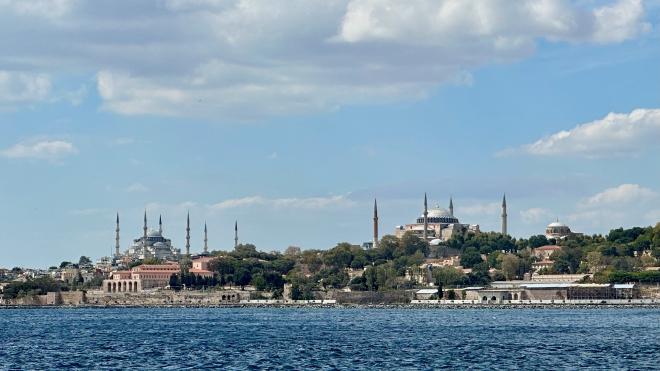
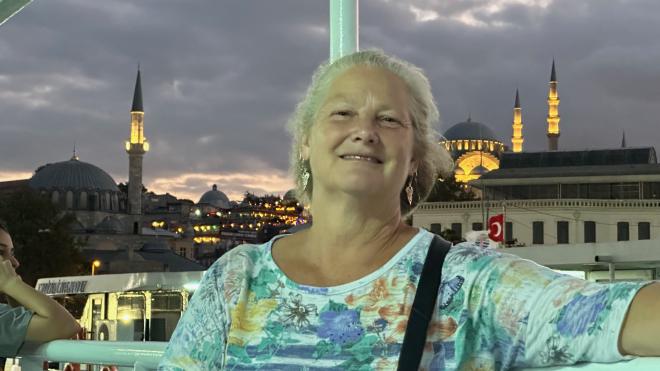
From the ferry we had wonderful views of both shores. The two large mosques you can see here are the Sultan Ahmet Mosque (better known as the Blue Mosque) at left, and Hagia Sophia Grand Mosque. Topkapı Palace is just to the right of Hagia Sofia but not really visible in this photograph.
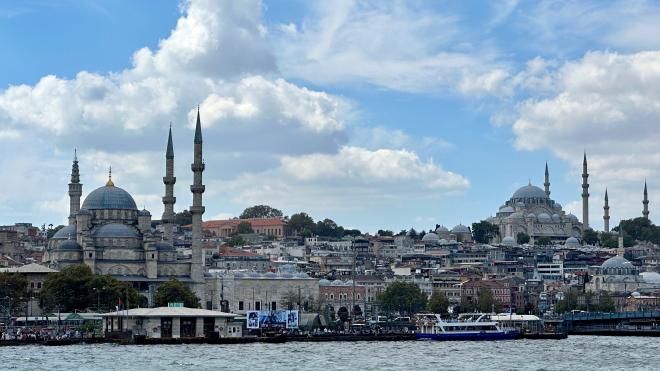
Our ferry went up the Golden Horn, which is a large horn-shaped inlet that separates Karaköy on the north from Eminönü on the south. Our ferry stopped at Karaköy first, before continuing on to Eminönü which is where Topkapı Palace is found. This is the view looking south across the Horn. The two large mosques you see are Yeni Cami (left) and Rüstem Paşa Camii.
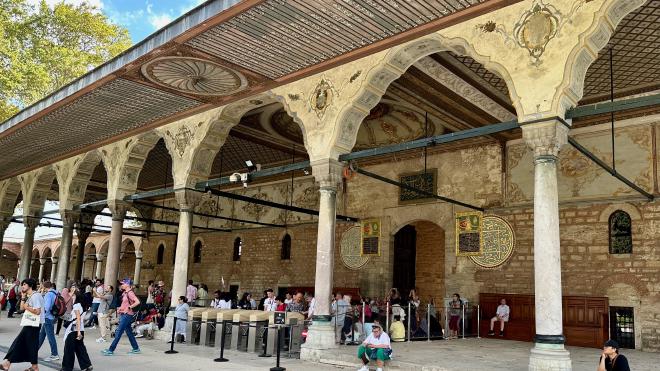
Topkapı Palace is an enormous, Ottoman-era complex with four major courtyards. This is a view from the southernmost courtyard, looking back towards the visitor entrance. Construction of the palace, under Sultan Mehmed the Conqueror, began in 1459 and the palace was essentially complete by 1465, though many expansions and modifications were made in subsequent centuries, particularly between 1520 and 1560 under Suleyman the Magnificent. The palace opened as a museum in 1924.
Some interior areas of the Palace permit photos and some don’t, it wasn’t always clear which was which, and where photos were prohibited the guards were lax in enforcement. So, a few of these shots are probably illegal. Enjoy!
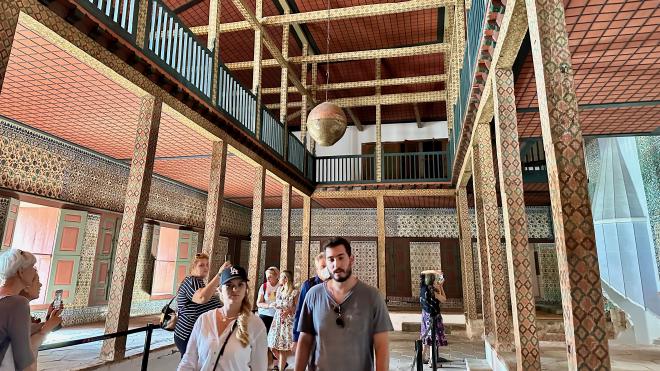
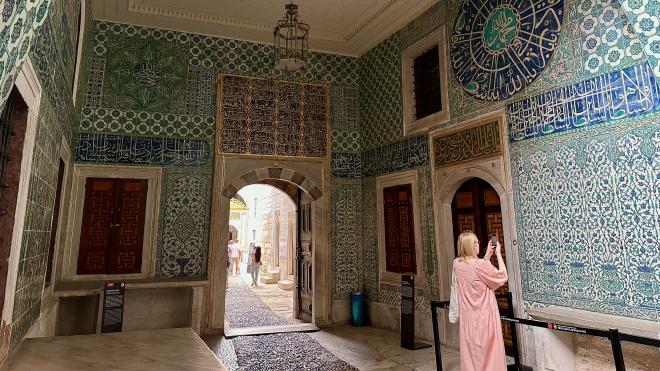
We didn’t take notes about which rooms were what and we were in the Palace for almost four hours, so we can’t provide a lot of detail. We’ve selected just a few representative photos to give you a taste of what the Palace looks like. As you can see, the rooms were in a wide variety of architectural styles. This was part of the harem complex.
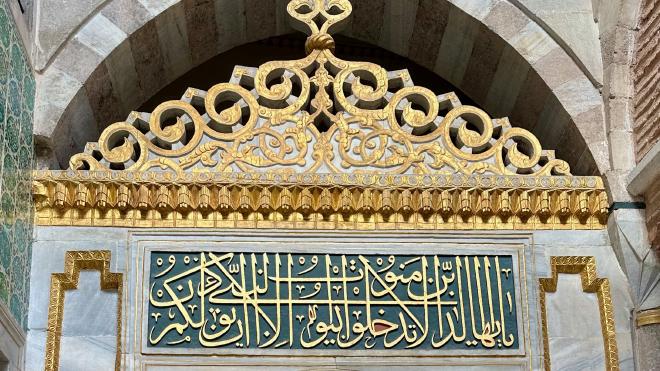
Many parts of the Palace were decorated with beautiful Arabic calligraphy. This is over the main door to the harem and translates as “O believers, do not enter the houses of the Prophet without permission.” Some of the other, equally beautiful, calligraphy recorded prosaic things like the value and source of endowments provided to the Palace eunuchs and other officials – sort of like naming an university faculty after a generous donor.
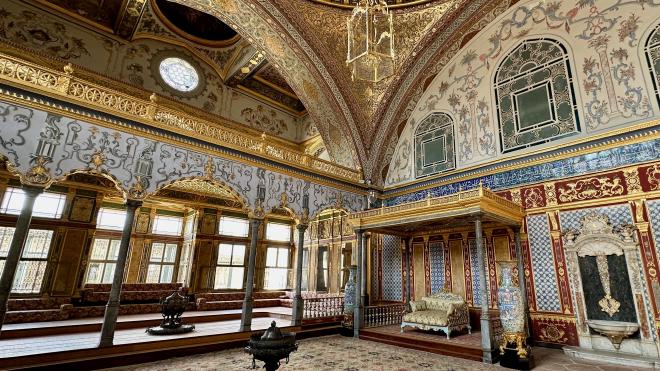
One of the Palace’s throne rooms (there were several) with particularly ornate decor.
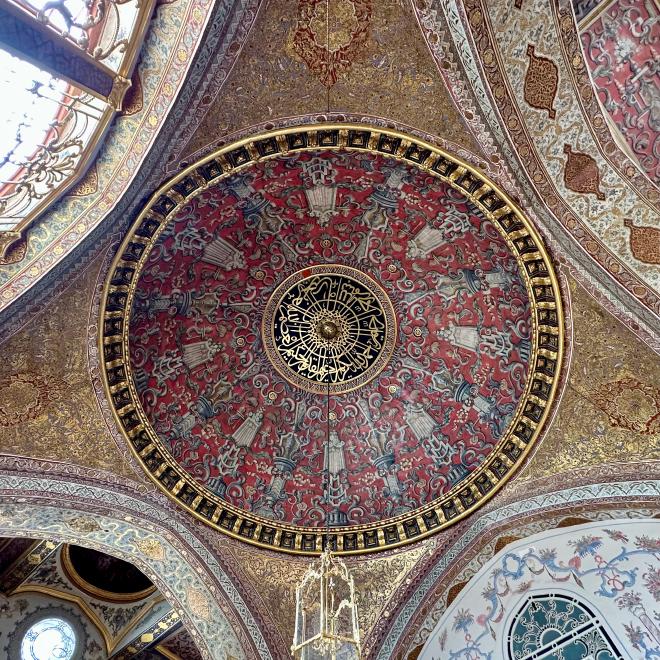
The ceiling of the throne room.
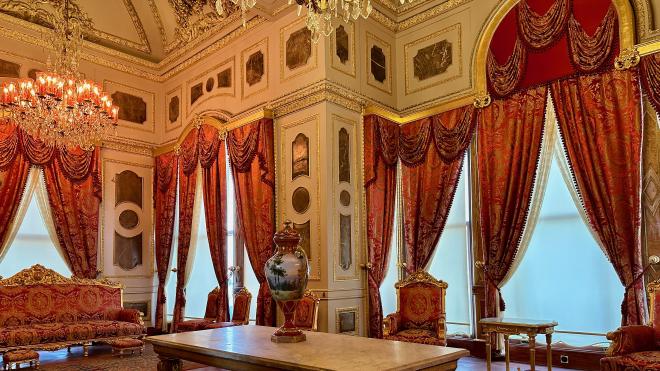
A room from late in the Ottoman period, showing significant French influence.
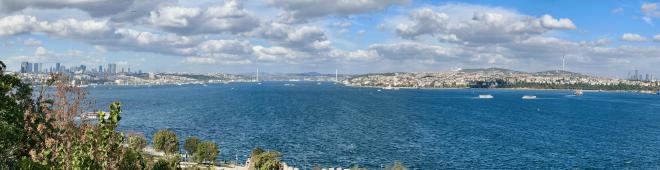
A view from one of the Palace’s north-eastern terraces. Kadıköy is at the extreme right.
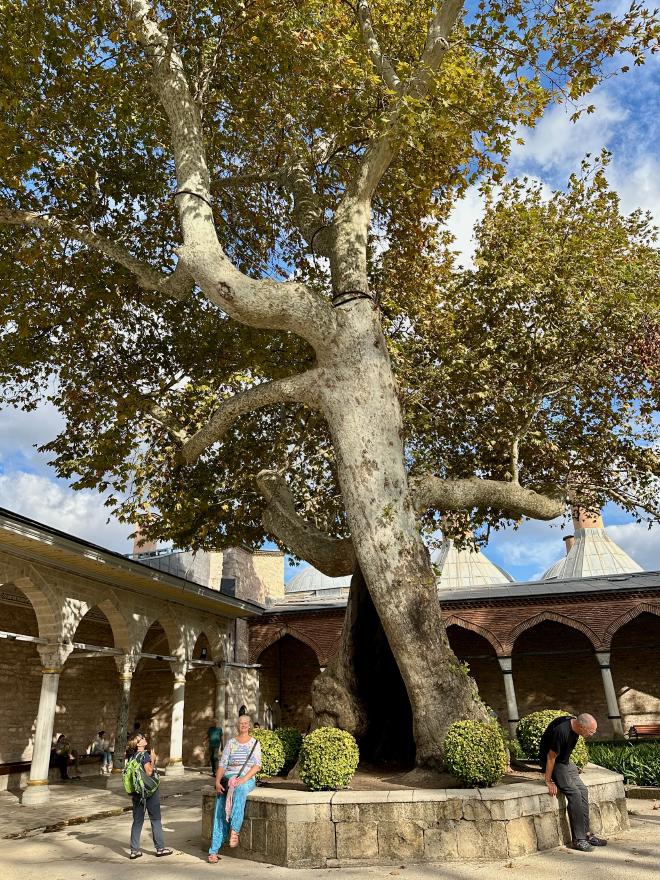
Karen particularly liked this tree in one of the courtyards.
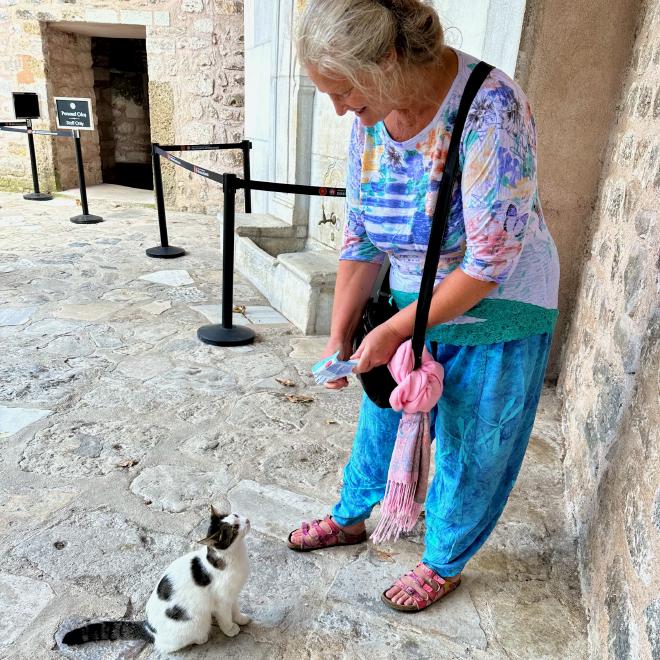
As we mentioned, cats are everywhere in Istanbul, including the Palace. Karen was getting a mint from her purse and this one came running when it heard the wrapping crinkle; she had to convince it that candy wasn’t going to be to its taste.
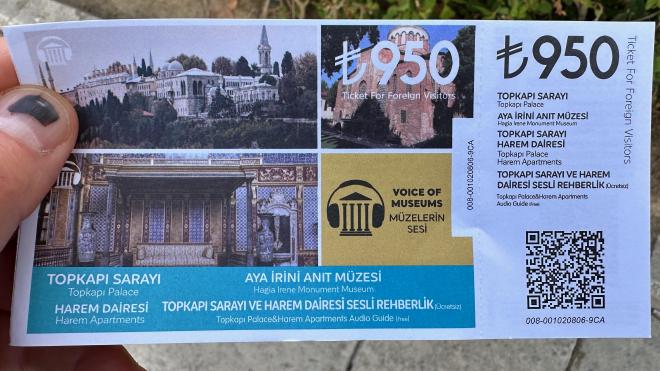
Even the ticket for the Palace was quite lovely, and includes an exterior view we weren’t able to capture ourselves.
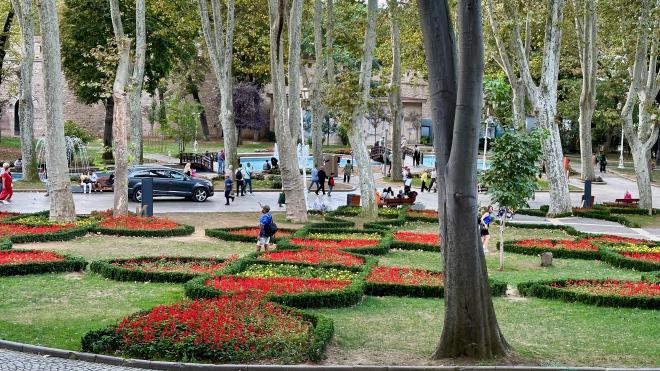
Just outside the Palace is Gülhane Park, which includes this clearly French-inspired garden.
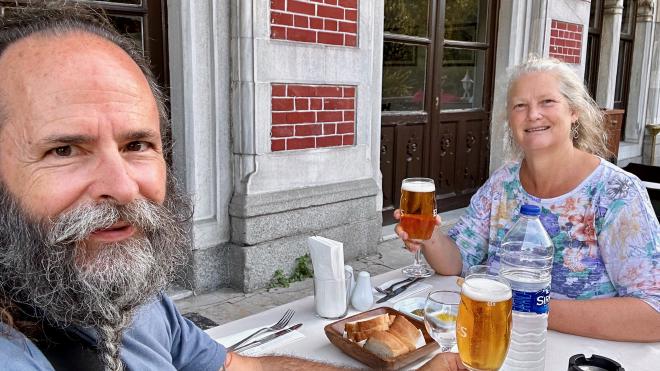
By the time we were done at the Palace we were famished, so we went for dinner at the Orient Express restaurant, which is located in the (now-repurposed) terminal where the famous train of the same name used to arrive.
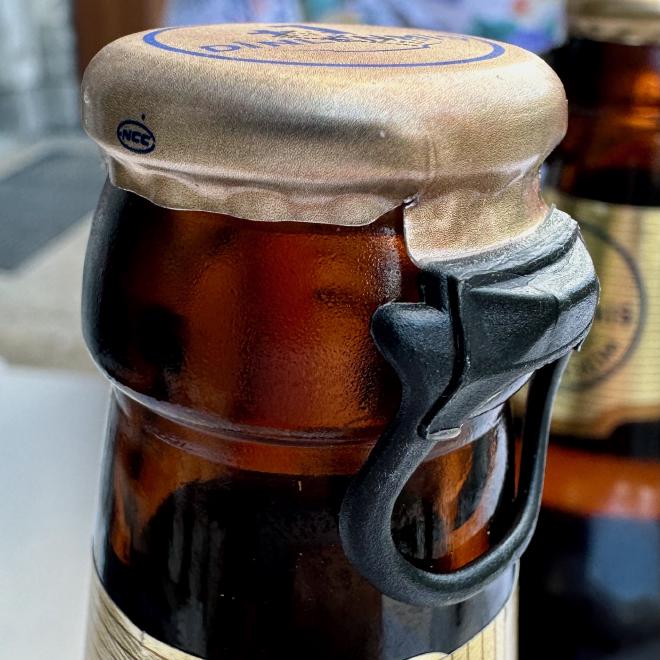
Here we were introduced to something we’ve only seen in Türkiye (at least so far): peel-off foil bottle caps. Clever! When the waiter put the bottles down and walked off without opening them we were momentarily nonplussed, until we noticed the little plastic handles. The beer, by the way, was Efes, which Greg remembers fondly from his time in Cyprus. Efes brewed on the island was notorious for its highly variable alcohol content but the few bottles of Efes we had in mainland Türkiye seemed fairly consistent.
After dinner we took the ferry back to Kadıköy…
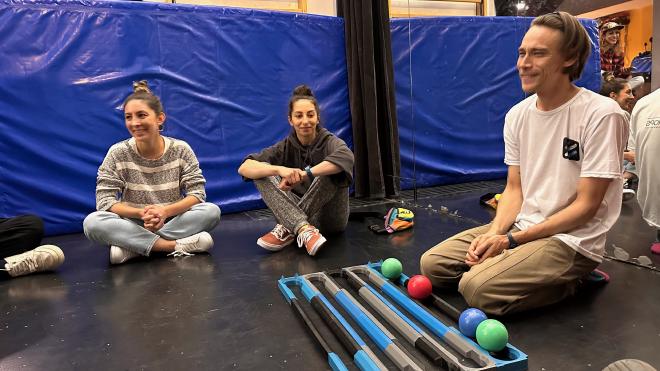
… and then hopped a bus to meet Funda at a studio near her apartment where Craig Quat (right) was giving a seminar. This was another lovely coincidence: Greg and Craig have known each other since 2016, when they met at a juggling convention in Pennsylvania. Craig is the inventor of the Harmonic Juggling visualization, and Greg developed software to draw it in collaboration with him then had the visualization of 77862 (the Why Not? passing pattern) tattooed on his left arm. The last time we connected in person was also a fun coincidence: in early 2017 we overlapped in Belfast for one day – Craig arriving to teach a seminar, us about to leave from a couple of days’ sightseeing with Jared – and Greg and Craig spent an evening wandering the city and talking about juggling. For many years Craig’s primary focus has been on Functional Juggling, which is largely about juggling as a physical, mental, and occupational therapy technique. In front of Craig is the Juggle Board, one of many styles of apparatus he’s designed to support this work. You can buy pre-made versions of the Juggle Board, and Craig has published open source instructions and 3D printer files to make your own. He has also published a freely-available book on Functional Juggling in English, Spanish, Italian and Greek (so far) with support from many organizations including the EU’s Erasmus+ program. Since about 2017 Craig has been living and working in South America; currently he’s on a tour of Europe teaching Functional Juggling and was in Istanbul for just a few days, with just the one seminar. We hadn’t told Craig we were in town; the look on his face when we walked into the studio was priceless.
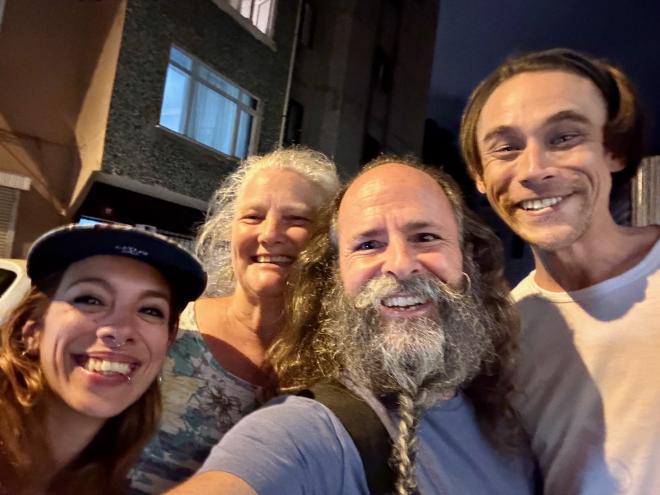
After the seminar (which was a lot of fun and a terrific learning experience) we got a selfie with Craig and his partner Jael. She also works in Functional Juggling, primarily using hula hoops, and was presenting a seminar the following day.